Custom Shot Blasting Machine:Wire Rod
Shot Blasting Machine
Advanced, high-efficiency shot blasting solutions designed for wire rods of all sizes, ensuring uniform 360° cleaning, durability, and maximum productivity.

boltQuick Answer
The Wire Rod Shot Blasting Machine is a continuous through-feed line for descaling, derusting and surface strengthening of wire and bar. Wire is drawn by external power, roughly straightened, then passed through the blast zone where 4–6 blast wheels with impellers at 1,500–3,000rpm throw abrasive at 60–80m/s for 360° coverage. It handles φ0.8–30mm at 0.5–90m/min, reaching Sa 2.5–Sa 3.0 at Ra 12.5μm, with dust ≤10mg/m³ and abrasive loss as low as 0.5–1% per hour.
- Wire diameter
- φ0.8 – 30 mm
- Line speed
- 0.5 – 90 m/min
- Surface cleanliness
- Sa 2.5 – Sa 3.0
- Blast wheels
- 4 – 6
Product Features
Multi-Specification Coverage
Supports synchronous cleaning for single or multiple strands. Specifications customized based on plant layout and capacity targets.
Matching Parameters
Exclusively optimized for circumferential cleaning. Variable frequency stepless adjustment for precise matching.
Workpiece Compatibility
Compatible with all types of metal wire rods, accommodating an ultra-wide diameter range of φ0.8mm – φ30mm.
Custom Blasting Design
360° wraparound custom blasting process. 3D dynamic simulation used to plot projection trajectories.
Electrical Adaptation
Supports wide-range voltage and frequency. Features top-tier international PLC brands for intelligent operation.
Environmental Dust Collection
Optimized for fine particle size and high volume of dust. Emission concentrations stably controlled below 10mg/m³.
Specialized Conveyor System
Wire-specific V-type or U-type groove roller structure. Closed-loop linkage with blasting, pay-off, and take-up systems.
Wear-Resistant Components
Mn13 wear-resistant material for core components. Modular 'quick-change' design reduces maintenance costs.
Abrasive Recovery System
Fully enclosed, multi-stage closed-loop recovery. Abrasive separation purity ≥98%, cycle utilization rate ≥95%.
Technical Parameters
Precise technical data for the Wire Rod series. Scaling and customization available for all models.
| Parameter | Standard Range |
|---|---|
| Model | QJM Series |
| Diameter range | φ0.8~φ30mm |
| Process rate | 0.5~90m/min |
| Quality grade of shot blasting | GB8923-88 A-B, Sa2.5-3.0 |
| Abrasive (Cast steel shots) | φ0.3mm, hardness HRC45~50 |
| Output surface roughness | Ra12.5μm |
| Noise level | noise≤85dB (A), 1m away from machine |
| Dust | ≤10mg/m³ |
Need Custom Specs?
Our engineering team specializes in non-standard solutions. We can adapt dimensions, blasting intensity, and material handling to your workflow.
Consult Our Engineers arrow_forwardProduct Showcase


Action in Motion
Global Success Cases

High-Carbon Steel Wire - USA
Achieved Sa 3.0 cleanliness at 80m/min processing speed.

Stainless Steel Wire - Australia
Custom multi-strand synchronous cleaning line, boosting output by 40%.
Frequently Asked Questions
What does the wire rod shot blasting machine do?expand_more
It continuously descales, derusts and surface-strengthens wire and bar in a through-feed process. It sits at three points in the metal processing flow: pre-drawing preparation, surface modification before further forming, and pre-coating treatment. Because it is continuous rather than batch, wire is handled at line speed from coil to coil without being cut or re-loaded.
What is the difference between the single wire and coiled wire rod machine?expand_more
The single wire machine takes one strand at a time and suits heavier diameters or where each strand must be tracked individually. The coiled wire rod machine processes coil-to-coil for smaller diameters and higher volume. Which one fits depends on wire diameter, required throughput and whether downstream equipment expects strand or coil output.
How does the processing cycle work?expand_more
The wire is pulled by external power and roughly straightened by a pre-straightener so it passes linearly through the blasting zone. Four to six high-speed blast wheels throw abrasive at the surface for 360° coverage. A high-pressure air purge then removes residual shot and dust, the wire exits through a guide device, and dust is filtered before discharge.
What wire diameters and line speeds are supported?expand_more
The QJM series covers φ0.8mm to φ30mm at process rates from 0.5 to 90m/min. The combination of diameter and speed determines throughput, so the line is configured around the actual product mix rather than a single nominal figure.
What surface quality is achieved?expand_more
Shot blasting quality reaches GB8923-88 A-B, Sa 2.5 to Sa 3.0, with an output surface roughness of Ra 12.5μm. That profile is what gives subsequent drawing lubricant or coating something to key into, and it is what pickling cannot deliver consistently on a continuous line.
How many blast wheels are used and how fast do they run?expand_more
Four to six high-speed blast wheels, with impeller speed adjustable between 1,500 and 3,000rpm. Wheel centrifugal force accelerates the abrasive to 60–80m/s. Impeller speed is the main control for blast intensity, so a thinner wire runs at lower speed to avoid surface damage while heavy scale on thick bar needs the upper end.
What abrasive is used and how fast is it consumed?expand_more
Cast steel shot of φ0.3mm at HRC45–50 is the standard charge. Abrasive circulates in a closed loop — screw conveyor, bucket elevator, separator with centrifugal screening and wind sorting, then shot storage tank — with abrasion loss as low as 0.5–1% per hour. That loss rate is the main operating cost line and is worth checking against the abrasive price when comparing quotes.
What are the dust and noise figures?expand_more
Dust emission is ≤10mg/m³ after filtration, and noise is ≤85dB(A) measured 1m from the machine. The dust collection system is part of the standard configuration rather than an add-on, because wire descaling generates fine metallic dust continuously and cannot be discharged untreated in most jurisdictions.
How does it compare with acid pickling?expand_more
Pickling produces waste acid and sludge that must be treated, and it introduces hydrogen into the steel, which is a real risk for high-strength wire. Mechanical descaling produces no waste liquid, needs no acid handling, and leaves a dry, uniformly profiled surface. For wire heading into drawing or coating, the mechanical route also removes scale physically instead of converting it chemically.
Why does surface strengthening matter for wire?expand_more
The impact of the abrasive forms a compressive stress layer on the wire surface rather than only stripping scale. For wire that will be drawn, bent or stranded, that layer resists surface crack initiation during subsequent deformation, which reduces breakage on the drawing line and improves fatigue life in the finished product.
How much can the line be customized?expand_more
Diameter range, line speed, number of blast wheels, inlet and outlet conveying, straightener and purge arrangement are all set to the wire range and required throughput. Adding a new diameter or converting between strand and coil handling is a configuration change rather than a new machine design.
Related Surface Treatment Equipment
Browse other high-durability shot blasting and sand blasting machinery collections engineered by Qingdao Jinwo Machinery.

Roller Conveyor Shot Blasting Machine
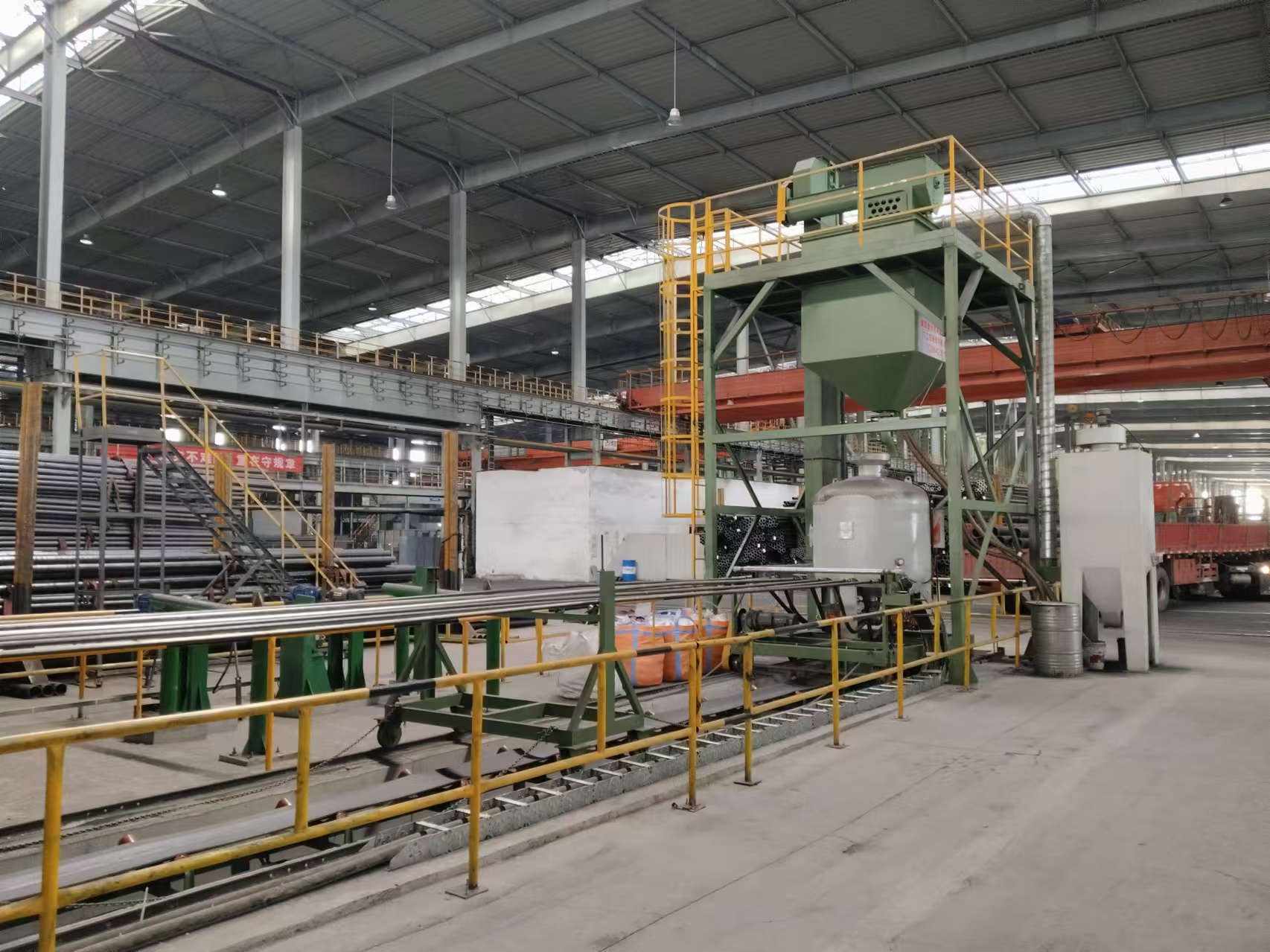
Steel Pipe Internal Surface Shot Blasting Machine
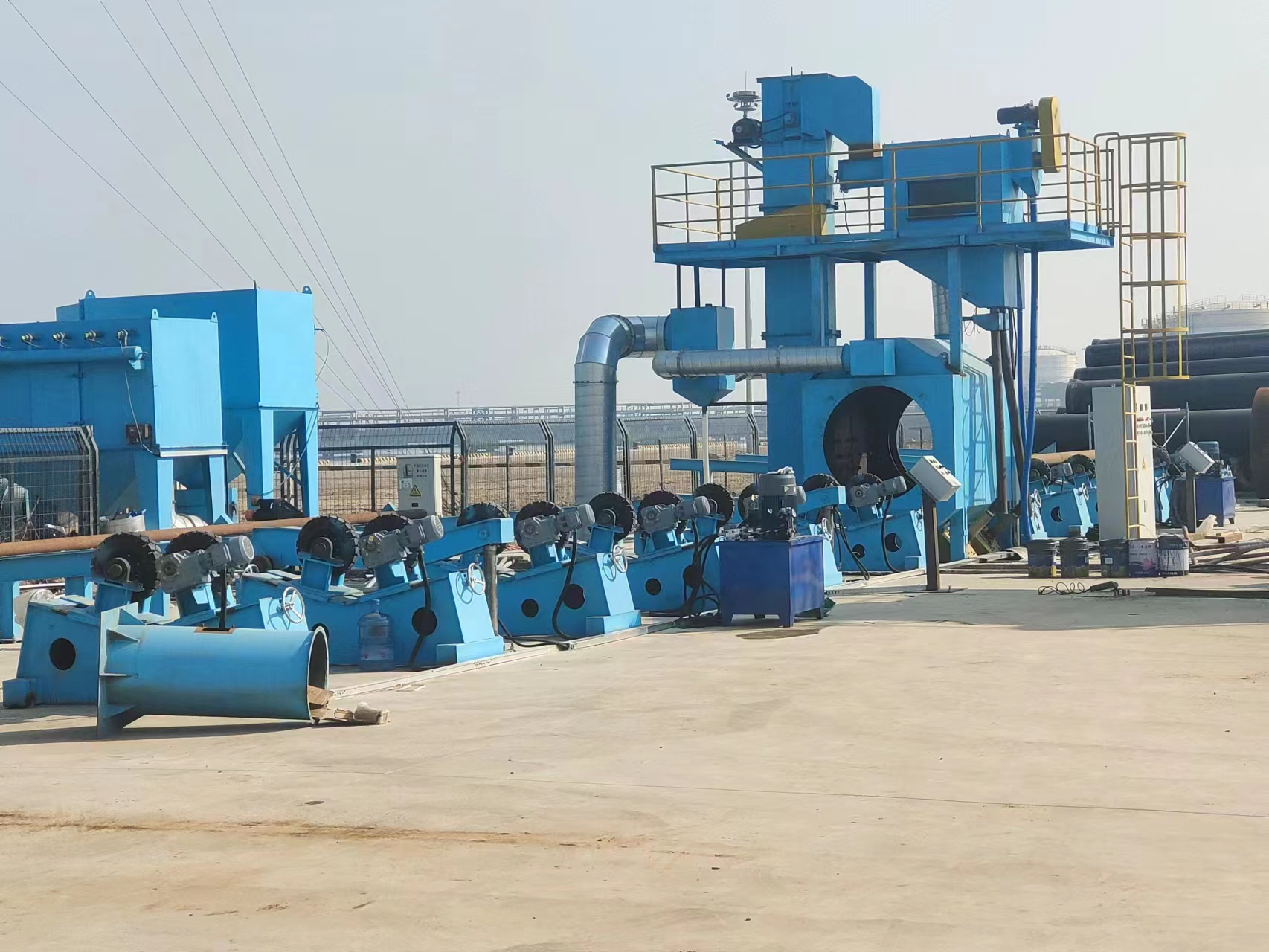
Steel Pipe External Surface Shot Blasting Machine
Global Industry Standard
By choosing Jinwo Machinery, you are investing in reliability, safety, and operational excellence backed by a decade of global success.
Certified Quality
Full ISO and CE compliance for all equipment series.
24/7 After-Sales Support
Global technical support team available for troubleshooting.
Durability & Maintenance
Maintain a long-term, stable inventory of wear parts, ensuring immediate shipment at any time.
Tailored CAD Design
Precise 3D modeling and workflow simulation to match your specific production line.
Request a Quote
Tell us about your project requirements and our engineers will provide a custom solution within 24 hours.